Programme
Beethoven
Overture to Egmont
Martin
Mass for Double Choir
– INTERMISSION –
Beethoven
Missa Solemnis
Margaret Yim, soprano
Bobbie Zhang, mezzo-soprano
Chen Yong, tenor
Albert Lim, baritone
Apollo Wong, music director & conductor
The Learners Chorus
The Learners Orchestra
Performers’ Biographies
Margaret Yim, soprano
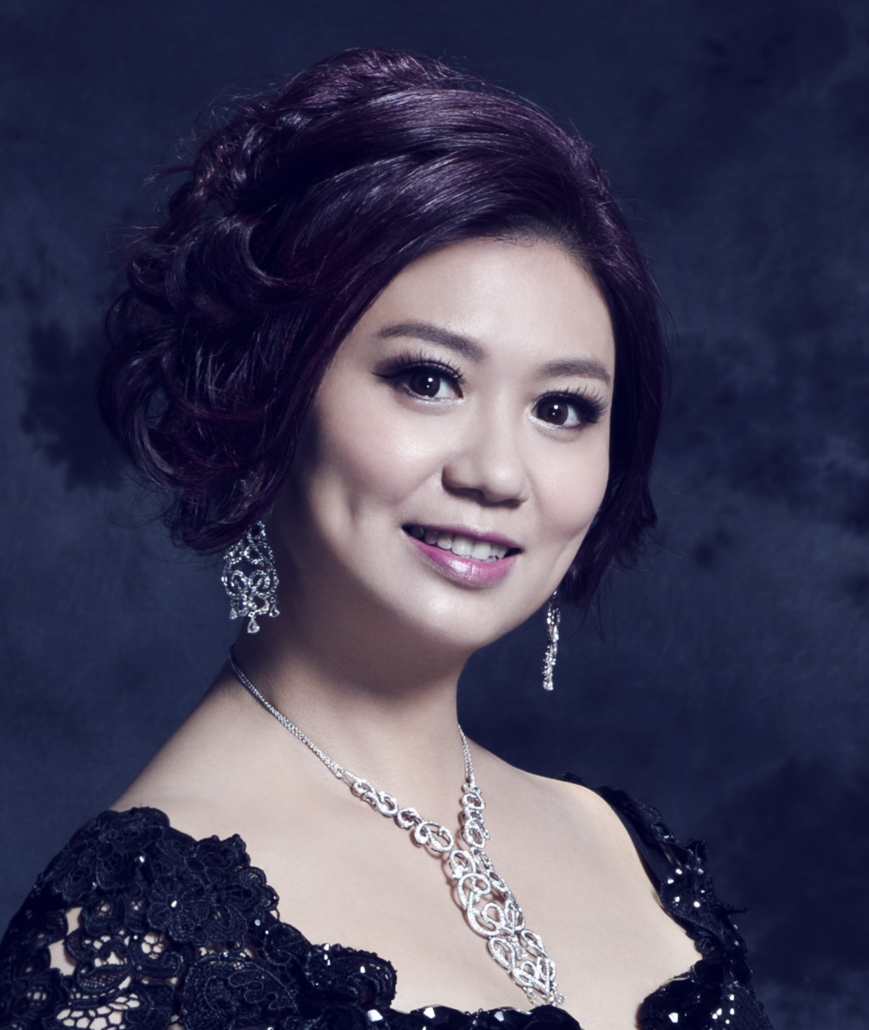
Margaret Yim graduated with Opera Programme at Queensland Conservatorium of Music, Australia while during her studies she won prizes from the Bach’s Music Competition, Singing Contest for Asian Chinese in Taiwan as well as the finalist of as well as being the finalist of the San Francisco Opera Center Merola Program. Margaret has performed various major operatic roles in La Traviata, Turandot, Die Zauberflöte, Così Fan Tutte, Hansel and Gretel, Rusalka, as well as the contemporary opera Dreaming Plum Blossoms Away, Night Banquet and The Shopkeeper’s Daughter, also frequently engaged in major roles in productions with Opera Hong Kong, and most importantly, served a double role as Musetta as well as Assistant Director under the renowned Italian director Maurizio di Mattia in the production of La Bohème. She was invited to perform in Puccini’s Il Trittico in the Macau Arts Festival, in Musica Viva’s production of The Legend of Zhang Baozai in Shanghai EXPO and Hong Kong, as well as in the musical production of The Good Person of Szechuan by Actors’ Family. Other performances as soloist include performances with the Choir of King’s College, Cambridge Concert, concert series by Bel Canto Singers, and concert series set to poems by the literary giant Yu Kwang Chung. She also performed the principal roles in five productions of atmospheric music theatre series by renowned composer Law Wing Fai since 2014 to present. In 2015, Margaret held her second full-house recital and also presented a student recital in 2016 showcasing the talents of her students as a celebration of her two decades of teaching. In addition, she was also the Assistant Director in Opera Hong Kong’s production of Otello in 2016. In 2017, she is performing a major role as Fairy in the premiere of an Italian Opera Pinocchio. Margaret, with renowned Italian Opera Director Maurizio Di Mattia, established the ‘2017 Maurizio’s Opera Masterclass’ in Italy with tour performances in various opera houses in Napoli and Atri. In 2018, Margaret was appointed as Artistic Director of Opera Hong Kong Children’s Chorus and has led the choir to various success during the opera season as well as its 10th anniversary celebration production of Mozart’s Magic Flute. In 2019, with remarkable success, Ms. Yim has produced the Young Singers Summer Opera Festival with Mozart’s Marriage of Figaro featuring young singers form the age of 5 to 24. Margaret is currently a vocal tutor of the Chinese University of Hong Kong, University of Hong Kong as well as the Education University of Hong Kong. Recent years, she is very active in the promotion of operatic singing education, adjudicating various vocal competitions and bridging the music education institutions within the Great Bay Area for the personal wellness of our future youth.
Bobbie Zhang, mezzo-soprano
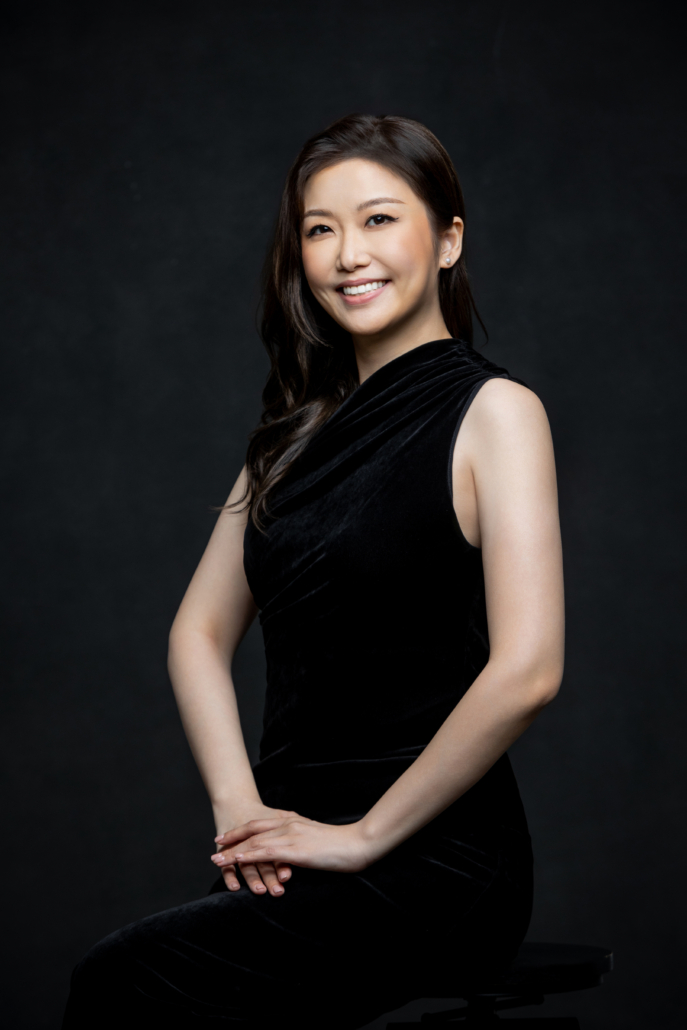
Mezzo-soprano Bobbie Zhang is a former member of Jockey Club Opera Hong Kong Young Artist Development Programme. She obtained her bachelor’s degree in music from the Shanghai Conservatory of Music and her master’s degree from The Hong Kong Academy for Performing Arts.
She has worked at the Shanghai Opera House and has appeared as a soloist in the China premiere of Shostakovich’s Jewish Folk Poetry, Berlioz’s Les nuits d’été, Beethoven’s symphony No.9, Mozart Requiem in D minor, Bach BWV248 Christmas Oratorio…
In addition, she has featured in many opera roles including Maddalena in Rigoletto, Dorabella in Così fan Tutte, Santuzza in Cavalleria Rusticana, Romeo in I capulrtti e i Montecchi, Sesto in La Clemenza di Tito, Orlofsky in Die Fledermaus, La badessa in Suor Angelica, Juno in Semele,Carmen and Mercédès in Carmen,Tisbe in La Cenerentola, Berta in Il barbiere di Siviglia, Cherubino and Marcellina in Le Nozze di Figaro.
Bobbie has also been a voice instructor at HKAPA’s Junior Programme.
Chen Yong, tenor
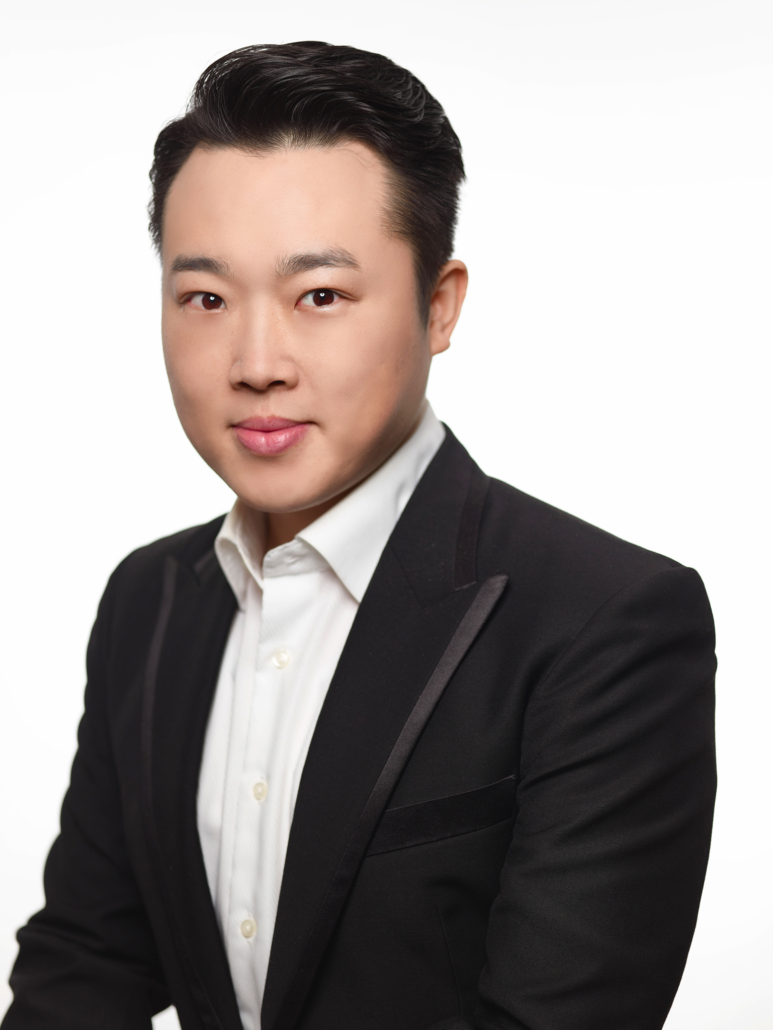
Mr. CHEN, Yong, one of Hong Kong’s foremost lyric tenors, is highly active in opera and concert soloist performances. To date, he has portrayed over 40 principal roles in operas, earning widespread acclaim from audiences. He has performed key roles in productions presented by the Opéra Festival d’Orange, Le French May Arts Festival, Opera Hong Kong, Hong Kong Arts Festival, Shanghai Opera, Italian Cultural Institute, Asia Society, and other prestigious institutions and organizations. His repertoire encompasses by Bellini, Gounod, Donizetti, Mozart, Rossini, Bizet, Offenbach, Verdi, Lehár, Leoncavallo, and Puccini.
Mr. CHEN has been featured in several opera films broadcast on Hong Kong television and screened in cinemas. His performance as Beppe in Donizetti’s Rita album had been published by Da Vinci Classics, was praised by the South China Morning Post for its “vigor and character,” while The Asian Review of Books described it as “suave” and characterised by “vaudevillian verve”.
As a soloist, Mr. Chen has collaborated with numerous ensembles, including the Hong Kong Philharmonic Orchestra, Hong Kong Sinfonietta, Hong Kong Chinese Orchestra, Hong Kong City Chamber Orchestra, and so on. He has performed at official events for the Chinese central government and the Hong Kong SAR government.
Mr. Chen holds a Master’s degree from the Hong Kong Academy for Performing Arts and University for Music and Performing Arts Vienna.
Albert Lim, baritone
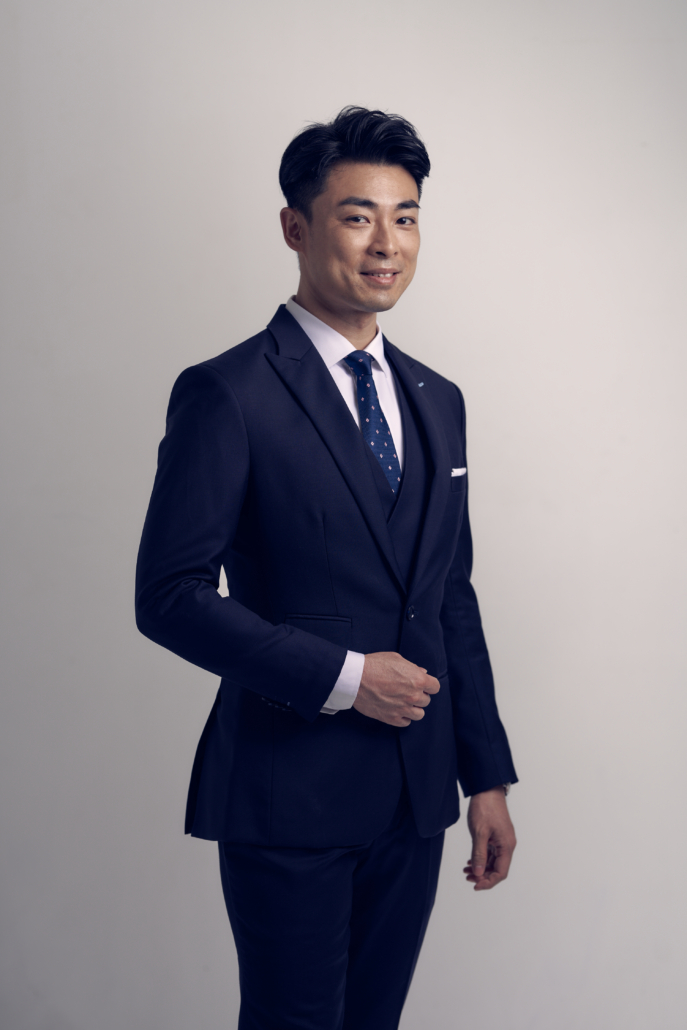
Baritone Albert Lim attained his Postgraduate Diploma in Performance and Postgraduate Certificate in Performance with Distinction at the Royal College of Music, after completinghis Bachelor Degree in Music (Honours) at the Hong Kong Academy for Performing Arts (HKAPA), where he received a number of scholarships.
Lim has appeared as guest soloist in concerts with the Hong Kong Bach Choir, the Hong Kong Oratorio Society, Die Konzertisten, Hong Kong Sinfonietta and the Hong Kong Philharmonic Orchestra, including J.S. Bach’s Magnificat, Handel’s Israel in Egypt, Brahms’ Ein Deutsches Requiem, J.S. Bach’s St Matthew Passion and St John Passion, Mozart’s C minor Mass, Fauré’s Requiem in D minor, and Rossini’s Petite messe solennelle etc..
Lim has also performed in numerous roles in many opera productions. In April 2007, he was invited by the Shanghai Opera House to sing the role of El Dancaïro in Bizet’s Carmen under the baton of Michel Plasson. He sang in many productions by Opera Hong Kong including Gounod’s Roméo et Juliette(Gregorio), Massenet’s Werther(Johann), Huang Ruo’s Sun Yat-sen(Ume), Bizet’s Carmen(Dancairo) & (Escamillo), and A Love Insight – Roméo et Juliette(Mercutio), Donizetti’s Don Pasquale (Malatesta) and also productions by Musica Viva including The Legend of Zhang Baozai (Sun Quan Mou) and Donizetti’s L’elisir d’amore(Belcore).
A highly versatile singer, Lim is equally at home in the pop music scene. He has shared the stage with Cantopop star, Hacken Lee, and Taiwanese singer, Jeff Zhang, and has also been engaged to record Cantonese vocal covers of Disney animation movies, including Lady and the Tramp, Enchanted, Lava and Mufasa the Lion King.
Lim is currently a Vocal Lecturer at HKAPA and the Chinese University of Hong Kong, Choir Conductor at the Hong Kong Children’s Choir and was appointed Assistant Chorus Master at Opera Hong Kong.
Samuel Huang, concertmaster
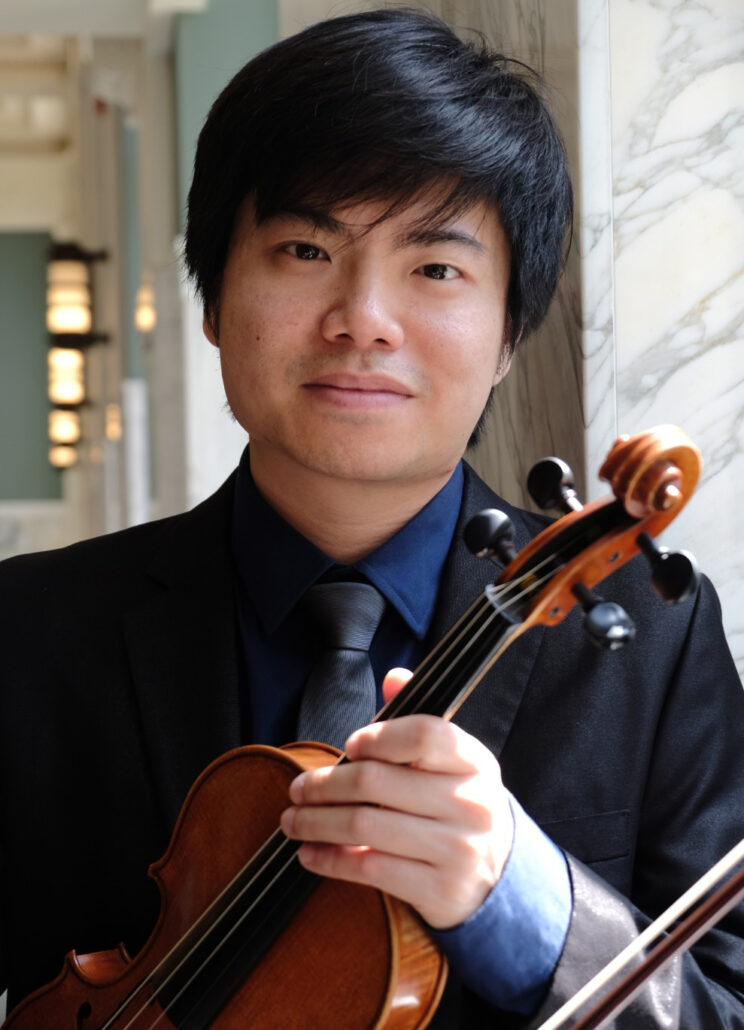
Samuel Huang was born and raised in Hong Kong, where he studied violin and viola with Ray Tsoi at Hong Kong Baptist University, and Ivan Chan at the Hong Kong Academy for Performing Arts. He furthered his education in the United States, studying under Benny Kim, the Miami String Quartet, Cathy Meng Robinson, and Amy Lee at Kent State University and the University of Missouri-Kansas City, earning both his master’s and doctorate degrees in violin performance. Samuel has broadened his understanding of string pedagogy by participating in teacher workshops and conferences at the University of Illinois Urbana-Champaign, Ohio State University, and the University of Wisconsin-Milwaukee.
A winner of the Hong Kong Baptist University Concerto Competition and the UMKC Concerto/Aria Competition, Samuel has performed as a soloist and concertmaster with orchestras such as the Pro Arte Orchestra of Hong Kong, Shenzhen Arts School Orchestra, Collegium Musicum Hong Kong, Kharkov Philharmonic Orchestra (Ukraine), Heartland Chamber Orchestra, Texas Festival Orchestra, and Miami Festival Opera Orchestra.
Beyond solo and orchestral work, Samuel served as the violinist with the NewEar Contemporary Chamber Ensemble in Kansas City for four years, collaborating closely with contemporary composers including Jennifer Higdon, Chen Yi, and Zhou Long. He has performed chamber music with renowned artists such as Ida Kavafian, Yekwon Sunwoo, and members of the Miami String Quartet and St. Petersburg String Quartet.
As an educator, Samuel has delivered masterclasses at various universities and festivals, including Western Illinois University, Fort Hays State University, and the International Fringe Music Festival.
Samuel has recently made significant contributions to Hong Kong’s music community. He has performed as a guest section player with the Hong Kong Philharmonic Orchestra and has served as guest assistant concertmaster for both OperaHK and Musica Viva. Additionally, he has led The Learners Orchestra in the role of concertmaster. Samuel was previously the resident conductor and a post-doctoral research fellow at the Academy of Music at Hong Kong Baptist University. He now leads the Strings Project for JC Project MuSE—a collaborative educational initiative involving the Hong Kong Jockey Club, HKPhil, HKBU, and EdUHK—where he specializes in curriculum development for strings education.
The Learners Chorus
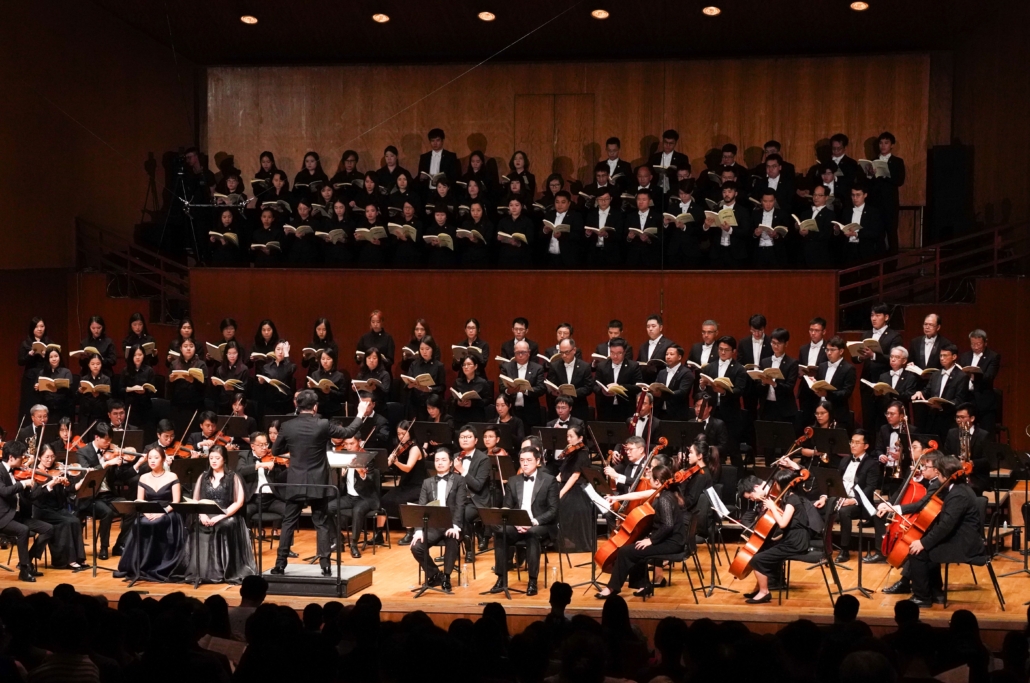
Music Director & Conductor: Apollo Wong
Assistant Conductor: Jason Liu
Pianist: Alexander Wong
The Learners Chorus was founded in 1979 by former members of the Hong Kong University Students’ Union Choir, and is today one of Hong Kong’s leading independent choirs, presenting large-scale choral repertoire with its orchestral partner, The Learners Orchestra, under Music Director Apollo Wong. Throughout its history the Chorus has commissioned new works from Hong Kong composers, helping to expand the local choral repertoire, with commissions from Chan Hing-yan, Victor Chan, Daniel Law, Law Wing-fai and, most recently, Jason Liu, among others.
Alongside the standard repertoire, the Chorus has often brought unfamiliar choral music to Hong Kong audiences, giving the Asian premiere of Uģis Prauliņš’s Missa Rigensis and performing Arvo Pärt’s Credo. Recent seasons have included Walton’s Belshazzar’s Feast, Mendelssohn’s Elijah, Bach’s Mass in B minor and Handel’s Messiah, and in 2025 Mahler’s Second Symphony with the University Choir and University Philharmonic Orchestra of the University of Hong Kong, renewing a connection with the University reaching back to the Chorus’s founding.
The Chorus has appeared as a guest with the Hong Kong Philharmonic Orchestra and the Hong Kong Philharmonic Chorus, in the Handel/Mozart Messias and Brahms’ Ein Deutsches Requiem, and with the Macao Orchestra in Bach’s Easter Oratorio and Beethoven’s Ninth Symphony.
Further afield, Learners made its North American debut in 2019 at the Los Angeles International Choir Festival, performing Verdi’s Requiem at the Cathedral of Our Lady of the Angels with the Dream Orchestra of Los Angeles, and closed the Shenzhen Belt & Road International Music Festival with the Shenzhen Symphony Orchestra the same year. Earlier engagements include Mahler’s Eighth Symphony at the Hong Kong-Vienna Music Festival and a London debut at St John’s Smith Square.
Learners is committed to bringing on young musicians: students sing and play alongside its members, young choir members have taken the podium in its concerts, and since 2006 its Student Ticket Sponsorship Programme has brought over 9,000 students to its concerts. Net ticket proceeds from the concerts it presents are donated to charity, supporting clean water, school-building and education projects in the region.
The Chorus returns to the Hong Kong Cultural Centre in November, joining the Hong Kong Philharmonic Orchestra, the Hong Kong Philharmonic Chorus and the London Philharmonic Choir for Mahler’s Eighth Symphony.
The Learners Orchestra
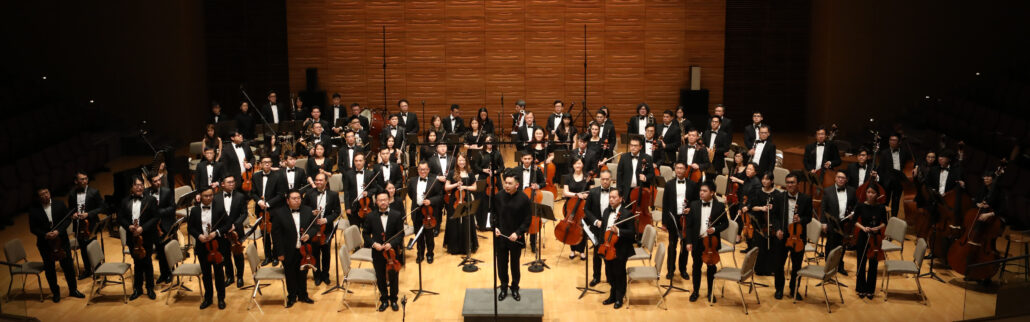
In April 2006, a group of caring orchestral players performed in “A Tribute to Mozart – Requiem and other works”, a charity concert presented by The Learners Chorus (the “Chorus”) to commemorate the 250th birthday of Mozart. In September 2007, the Friends of Learners Orchestra (the “FLO”) was officially founded and made its debut at the Chorus’ annual concert at the Hong Kong Cultural Centre, featuring Prokofiev’s Alexander Nevsky cantata. Since then, FLO has performed with the Chorus in its large-scale concerts, namely, “Magnificat through the Ages”, “Celebrating Thirty Years of Harmony: Gustav Mahler Symphony No. 8 Symphony of a Thousand”, “Rossini Messa di Gloria & Brahms Schicksalslied”, and “Giuseppe Verdi: Messa da Requiem”. At its performance in “Celebrating Great Masters for the Voice” in September 2013, FLO was renamed The Learners Orchestra (“TLO”), making it the official orchestral partner of the Chorus. As part of the Chorus’ 35th Anniversary Concert Series, TLO held its inaugural concert with the Chorus in May 2014, performing “Mahler Symphony No. 2 Resurrection”, followed by “Brahms Ein Deutsches Requiem” in August 2014. After that, TLO performed in the 2015 SliderAsia Music Festival’s “SliderAsia Open Winners Feature & Learners Orchestra Concert”, “La Musica Sacra Italiana” in July 2015, “Songs of Praise – in Voces Multi” in January 2016, featuring Lully’s Te Deum, “Mozart Great Mass in C minor” in September 2016, and “Lux Aeterna” in January 2017.
2017 also saw the 10th anniversary of the Learners Orchestra. “10 May x 10 Years: A French Celebration” concert was held in May 2017, featuring Saint-Saëns’ Symphony No. 3 in C minor “Organ”. This was followed by “Lights of Belief and Praise” in September 2017, “A Bicentennial Celebration: Gounod St Cecilia Mass” in September 2018, “UC Conductors Through the Ages” in January 2019, featuring Fauré’s Requiem, “Tchaikovsky Symphony No. 4” in June 2019, and “Carmina Burana” in November 2019. Recent major works performed included Mozart’s Requiem, Bach Mass in B minor, Mendelssohn Elijah, and Walton Belshazzar’s Feast.
Members of TLO are recruited from local conservatories and universities, as well as from community and professional orchestras. All members strongly dedicate themselves to supporting charitable performances of the Chorus without receiving any honorarium. Their selfless and benevolent effort, and consistently high performance standards have been much appreciated by the Chorus, the audience, and all beneficiaries. TLO also aims to play a vital role in promoting music education – specifically, by providing opportunities for music students to work alongside their teachers, amateur musicians among professional; and in expanding their concert repertoire beyond standard orchestral music.
Apollo Wong, music director & conductor
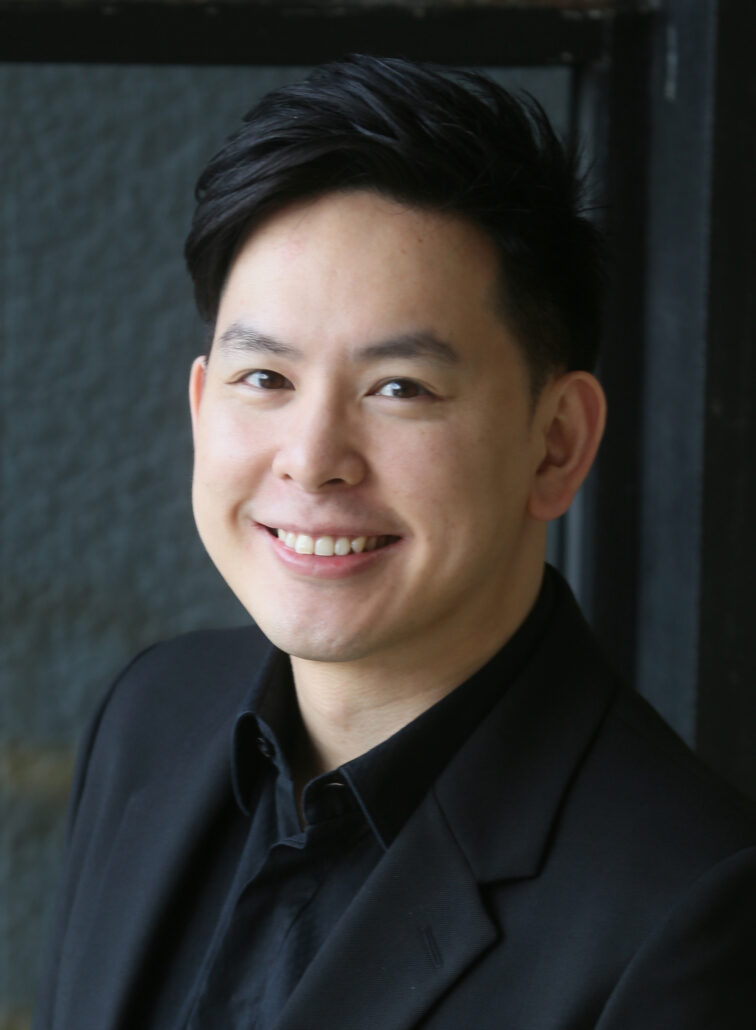
A native of Hong Kong, Apollo Wong is a conductor, operatic bass and educator. Educated in the United States and Germany, he studied voice with Vladimir Chernov, Juliana Gondek and Sami Kustaloglu. He was the winner of Palm Springs Opera Guild Vocal competition and the Pasadena Opera Guild Vocal Scholarship. In 2019, Wong has won first place at the Hong Kong Choral Conducting Competition and the Asia Pacific Youth Choir Award.
Wong has sung major operatic and musical roles including Figaro (Le Nozze di Figaro), Don Alfonso (Così fan tutte), Sarastro (Die Zauberflöte), Bottom (A Midsummer Night’s Dream), Frère Laurent (Roméo et Juliette), Colline (La Bohème), Simone (Gianni Schicchi), Geppetto (Pinocchio) and Javert (Les Misérables), among others. Amongst his concert and oratorio repertoire, he has notably both sung the bass solos and conducted Brahms’ Ein Deutsches Requiem, Faurè’s Requiem, Handel’s Messiah, Mahler’s Symphony No. 8 “Symphony of a Thousand”, Mozart’s Requiem, and Verdi’s Messa da Requiem. He also performed in world premiere operas by Chan Hing Yan: Lu Xun (Heart of Coral), Moonlight (Ghost Love) and Kang You Wei (Datong); and Caterpillar and Duchess (Alice in Wonderland) by Valtinoni. He recently sung Schubert’s Winterreise (with Hong Kong City Contemporary Dance Company).
Being an active conductor, Wong is currently Chorus Master of Hong Kong Philharmonic Chorus, Music Director of The Learners Chorus and The Learners Orchestra, and conductor of Hong Kong Children’s Choir and St. Paul’s Co-educational College senior choirs. Being recognized as an inspiring chorus and orchestral builder, from community to professional ensembles, he has introduced a broad variety of choral and orchestral music to the public: from Magnificat by Bach and Rutter, Brahms’ Ein Deutsches Requiem and Schicksalslied, Gounod’s St. Cecilia Mass, Lauridsen’s Lux Aeterna, Lully’s Te Deum, Mendelssohn’s Lobgesang, Mozart’s Great Mass in C Minor and Requiem, Rossini’s Messa di Gloria and Stabat Mater, Tallis’ Spem in Alium, Verdi’s Messa da Requiem and Quattro pezzi sacri; to Mahler’s Symphony No. 2 “Resurrection”, Martin’s Mass for Double Choir, Orff’s Carmina Burana, Pärt’s Credo, Poulenc’s Gloria, Prauliņš Missa Rigensis, Prokofiev’s Alexander Nevsky, Rachmaninoff’s The Bells, and Stravinsky’s Symphony of Psalms.
He has been the chorus master for conductors such as David Atherton, Lorin Maazel, Helmuth Rilling, Tan Dun and Jaap van Zweden; and has been assistant conductor in operas Aida, Don Giovanni, Gianni Schicchi, L’elisir d’more, La Bohème and Turandot.
Programme Notes
Beethoven: Overture to Egmont
Goethe’s tragedy Egmont tells the story of Count Egmont, a sixteenth-century Flemish nobleman who resisted Spanish rule in the Netherlands and was executed for it. His death becomes the spark of the uprising he did not live to see. When the Burgtheater in Vienna commissioned incidental music for a production of the play in 1809, Beethoven took up the task out of admiration for Goethe, producing an overture and nine further numbers. He later claimed to have accepted no fee, writing “solely out of love for the poet”. The timing gave the subject particular weight, as Beethoven wrote the music while Vienna was under Napoleonic occupation, and the play’s themes of tyranny and liberation were the daily reality of the city around him.
The overture compresses the whole drama into around nine minutes. It opens in F minor with massive chords in the rhythm of a sarabande, the old Spanish court dance and a pointed emblem of the oppressor. A pleading reply in the woodwinds seems to speak for the oppressed. The main Allegro gathers pace and defiance, and the struggle comes to a head when the opening chords return at full force, blared out by the brass and answered each time by a pleading motif in the violins. At the third exchange the whole orchestra joins the brass, the violins reply with a sharp falling figure, the stroke of the executioner’s blade, and then comes silence. Beethoven noted in his sketches that Egmont’s death could be expressed by exactly this, a silence. A hushed prayer in the winds follows. Then, instead of ending in tragedy, the overture bursts from pianissimo into a radiant F major coda, the Siegessymphonie or “Symphony of Victory”, which Beethoven brings back at the very end of the play. Egmont dies, but the cause lives on. The journey from darkness to light echoes his Fifth Symphony of two years earlier, and makes a fitting first summit for this evening’s climb.
Martin: Mass for Double Choir
The Composer
Frank Martin (1890–1974) was born in Geneva, the tenth and youngest child of a Calvinist pastor. He was playing and improvising at the piano before he started school, and at the age of twelve a performance of Bach’s St Matthew Passion made an impression so deep that it settled the course of his life. To satisfy his parents he read mathematics and physics at university, but at the same time he studied piano, harmony and composition privately with the Genevan composer Joseph Lauber, and later rhythm and theory with Émile Jaques-Dalcroze.
Martin spent much of the 1920s living and travelling across Europe in search of a musical language of his own. The style that emerged drew on Gregorian chant, Renaissance polyphony and Baroque counterpoint, and from 1932 on Schoenberg’s twelve-tone technique, which Martin adapted to his own ends without ever abandoning tonality. International recognition came late, in his fifties, with works such as the Petite symphonie concertante and the oratorios In terra pax and Golgotha. A quiet and devout man, Martin regarded his faith as the wellspring of his art, and nowhere is that more literally true than in the Mass for Double Choir, which we will hear tonight.
Mass for Double Choir
The Mass was never commissioned. Martin wrote it, in his own words, “of my own free will, without commission or remuneration”, composing the first four movements in 1922 and adding the Agnus Dei in 1926. That the son of a Calvinist pastor should privately set the Catholic Mass at all is remarkable; that he then put the finished score in a drawer and made no attempt to have it performed is stranger still. It stayed there for forty years, included in his list of works as a formality. In 1962 Franz W. Brunnert, director of the Bugenhagen-Kantorei in Hamburg, noticed the entry in that list and asked Martin to send him the score. Brunnert conducted the premiere in Hamburg in November 1963, more than forty years after the first notes were written, and the work was published in the same year.
Martin later explained why he had withheld it for so long. He feared the work would be judged “on a purely aesthetic level”: “As far as I was concerned it was a matter between God and myself. I felt that religious fervour should remain private and not be influenced by public opinion.” The work he considered too private to share has since become one of the most admired a cappella works of the twentieth century, and a cornerstone of the double-choir repertoire.
The Music
The Mass is scored for two unaccompanied four-part choirs, which Martin uses sometimes in dialogue, sometimes in opposition, and sometimes as a single eight-part body of sound. Behind the writing stands the whole history of sacred polyphony: the imitative textures of Palestrina and Victoria, the paired echoes of Josquin, and the divided-choir splendour of Gabrieli’s Venice, all refracted through harmonies and rhythms that are unmistakably of the twentieth century.
The Kyrie opens with a flowing, chant-like line in the altos, which is gradually woven into a rich antiphonal texture, rising to an urgent plea for mercy before falling away to a hushed final “eleison”. The Gloria begins in the same quiet air before breaking into dancing, rhythmic polyphony with a clear debt to Bach; listen at “Et in terra pax” for one choir echoing the other phrase by phrase, an exchange straight out of the Renaissance. The Credo is plainer and more declamatory, as befits a statement of belief, but it is full of vivid word-painting: a suspended stillness at “Et incarnatus est”, an anguished “Crucifixus”, and an “Et resurrexit” that seems to shimmer with light.
The Sanctus opens with murmured invocations in the men’s voices beneath a radiant soprano line, and gathers energy through “Pleni sunt coeli” and into the Benedictus, where the second choir drives an insistent, almost percussive rhythm beneath the first, until the two choirs erupt together in the closing “Hosanna”. The Agnus Dei, added four years after the rest, is the simplest movement of the five, and the most affecting. The second choir keeps a slow, steady tread while the first, largely in unison, sings a lyrical, syncopated melody that recalls the flowing line which opened the Kyrie, binding the work into a circle. At “Dona nobis pacem” the two choirs at last unite, and the Mass closes in a serene G major: a summit reached not in triumph but in stillness.
Beethoven: Missa Solemnis
Missa Solemnis
In 1819 Beethoven learned that Archduke Rudolph, his patron, pupil and friend, was to be installed as Archbishop of Olmütz the following spring. He resolved to write a festive mass for the ceremony. The deadline came and went. The mass kept growing, and Beethoven kept digging: he studied plainchant, Palestrina and Handel, read theological commentary, and weighed the Latin text word by word. What was meant as an occasional piece became the most laboured-over work of his life, occupying him for nearly six years. The score was substantially complete by 1823, three years too late for the enthronement it was written to adorn, and he was still revising when the engraver’s copy finally went to his publisher in 1825. The struggle consumed everyone around him. His autograph became so choked with corrections and erasures that fresh copies had to be written out by hand, and Beethoven’s letters to one hapless copyist descend into magnificent abuse: “Slob of a scribe! Idiot! Just correct the mistakes you made through your ignorance, presumption, self-deception, and stupidity!”
Beethoven had no doubt about what he had made. He called the Missa Solemnis his greatest work, and offered manuscript copies by subscription to the courts of Europe before any public performance. The premiere took place in St Petersburg in April 1824, arranged by his admirer Prince Galitzin. Vienna heard only the Kyrie, Credo and Agnus Dei a month later, in the famous concert of 7 May 1824 that also premiered the Ninth Symphony, and even then the censor required the movements to be billed as “Three Grand Hymns”, since liturgical texts could not be sung in a theatre. Beethoven never heard the complete work performed. Over the Kyrie in his manuscript he wrote a dedication that has become inseparable from the music: “From the heart; may it in turn go to the heart.”
The Music
The Missa Solemnis sets the same five movements of the Ordinary as the Martin we heard in the first half of the concert, but there the resemblance ends. It runs to some eighty minutes, calls for four soloists, chorus and full orchestra, and makes demands on its singers that remain notorious two centuries on. The choral writing sits high, stays high, and yields nothing; this is music at the outer edge of what choral voices can do, which is part of its meaning. Effort is written into the work on purpose: it is the sound of humanity straining upward.
The Kyrie, marked “Mit Andacht” (with devotion), is the most traditional movement: grand, spacious and solemn. The Gloria erupts at full speed and barely pauses, ending in a colossal fugue on “In gloria Dei Patris” and a final shout of “Gloria!” flung back as the movement slams shut. The Credo is a cathedral in sound, built around vivid word-painting: the orchestra plunges at “descendit de coelis”, time seems to stop for the mystery of “Et incarnatus est”, and the resurrection blazes out in sudden light. In that hushed passage, tonight’s performance follows Beethoven’s own final correction: a manuscript copy he proofread for the King of Denmark shows him deleting the tenor soloist’s opening phrase and writing “Coro” above it, so the words are sung, as he last intended, by the choral tenors. The movement ends with the double fugue on “Et vitam venturi saeculi”, pages that singers speak of the way climbers speak of the final ridge. The Sanctus opens in hushed awe, and then, in the Benedictus, a solo violin descends from its highest register like the blessing made audible, floating above the voices in one of the most loved passages Beethoven ever wrote. The Agnus Dei begins as a dark plea in B minor, and over the concluding “Dona nobis pacem” Beethoven inscribed his intent: a prayer for inner and outer peace. Twice the prayer is interrupted, as drums and trumpets bring the noise of war to the horizon and the voices cry out in fear. Peace returns, but it is not a triumphant peace; it is fragile, human and hard-earned. Beethoven ends his greatest work not with certainty but with hope. Vienna in 1824 heard only three movements; tonight it is sung whole.
Programme notes by Kevin Cheng.
The Learners Chorus
Music Director & Conductor: Apollo Wong
Assistant Conductor: Jason Liu
Pianist: Alexander Wong
The Learners Orchestra
# Concertmaster
* Principal
§ Courtesy of Hong Kong Chinese Orchestra
Acknowledgements
The Learners Chorus would like to express her gratitude to the following individuals and organizations for their valuable support in the production of this concert:
- Mr. Chen Yong
- Ms. Miranda Chu
- Mr. Samuel Huang
- Ms. Christine Lee
- Mr. Albert Lim
- Mr. Benedict Shea
- Mr. Alexander Wong
- Mr. Vicky Wong
- Ms. Margaret Yim
- Ms. Bobbie Zhang
- Ms. Audrey Chan
- All players of the Learners Orchestra
- City Performing Arts Services Company
- Hong Kong Chinese Orchestra
- Methodist International Church Hong Kong
- The Force Image